
UK Counter-UAS (Unmanned Aircraft System) Market Outlook 2021-2031F
Market Size, Share, Trends, Opportunities, and Competitive Analysis - Segmented by Technology (Detection and Tracking, Defeat and Interdiction, and Command and Control); Platform (Fixed-Site, Mobile and Vehicle-Mounted, Naval, and Handheld); End User (Military, Homeland Security and Law Enforcement, and Critical Infrastructure); and Region
UK Counter-UAS Market to Reach USD 1,250 Million by 2031, Growing at a 26% CAGR: How the Defence Investment Plan, Homeland Protection and Laser Weapons Are Reshaping Air Defence

UK Counter-UAS (Unmanned Aircraft System) Market Overview
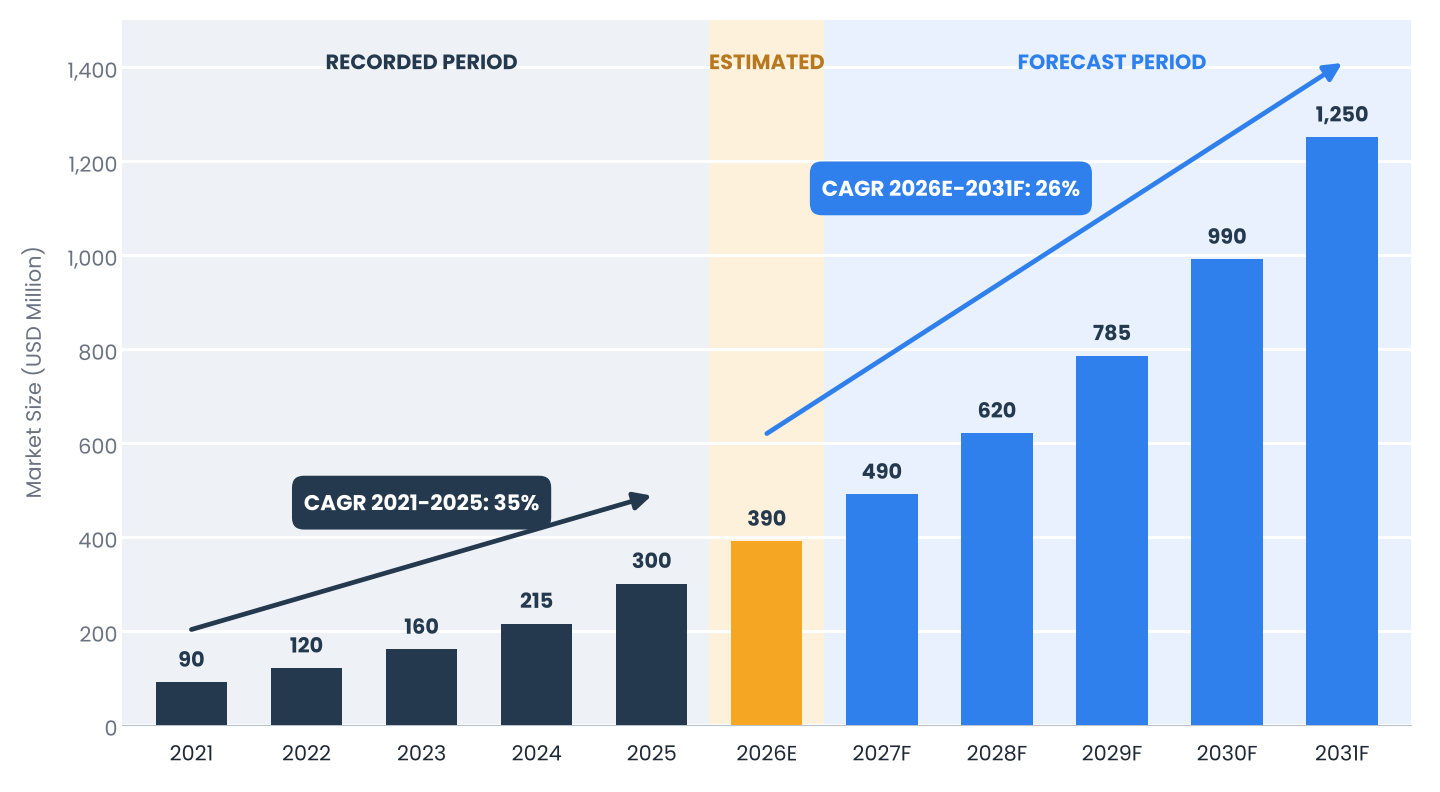
The UK is moving counter-drone capability from a niche add-on to a core layer of air defence and homeland protection. Neargoal Consulting estimates the UK counter-UAS market at about USD 300 million in 2025, rising to USD 390 million in 2026E and USD 1,250 million by 2031, a 26% CAGR over 2026E-2031F, after a 35% CAGR over 2021-2025. The Defence Investment Plan announced on 30 June 2026 commits more than USD 6.6 billion (GBP 5 billion) to drones and autonomous systems and about USD 1.04 billion (GBP 790 million) to countering air, missile and drone threats. The research report quantifies the market by Technology, Platform, End User and Region and shows where procurement will land first.
Key Takeaway Government defence programs will anchor demand, but the largest growth lies in detection networks, low-cost effectors and command-and-control software that connect sensors to shooters. Suppliers with UK-cleared, integration-ready products will win early. |
UK Counter-UAS Market at a Glance
MARKET DEFINITION Spending on Counter-UAS Detection, Defeat and Command Systems Procured in the UK (USD Million) | ||
BASE YEAR / ESTIMATED YEAR 2025 / 2026E | FORECAST PERIOD 2027F-2031F | |
MARKET SIZE, 2025 USD 300 Million | MARKET SIZE, 2026E USD 390 Million | |
MARKET SIZE, 2031F USD 1,250 Million | RECORDED CAGR, 2021-2025 35% | |
FORECAST CAGR, 2026E-2031F 26% | DEFENCE INVESTMENT PLAN, JUNE 2026 More Than USD 6.6 Billion for Drones and Autonomous Systems | |
COUNTER AIR, MISSILE AND DRONE THREATS About USD 1.04 Billion | LEADING TECHNOLOGY Detection and Tracking | |
FASTEST-GROWING TECHNOLOGY Directed Energy and Low-Cost Defeat | LEADING END USER Military | |
KEY CONSTRAINTS Restricted Defeat Authority, Budget Timing and Supply Chain Clearance | ||
Source: Neargoal Consulting Analysis | ||
Market Outlook
Our study estimates the market will grow at a 26% forecast CAGR (2026E-2031F), after a 35% CAGR over 2021-2025 from a small base. Spending is expected to be front-loaded in detection, command-and-control and homeland sites, with defeat systems scaling from 2028F as laser and low-cost effectors reach service. Our analysis expects military programs to remain the largest share, while critical infrastructure and prisons raise their share as regulations evolve.
Figure 1: UK Counter-UAS Market Size, 2021-2031F (USD Million)
Source: Neargoal Consulting Analysis
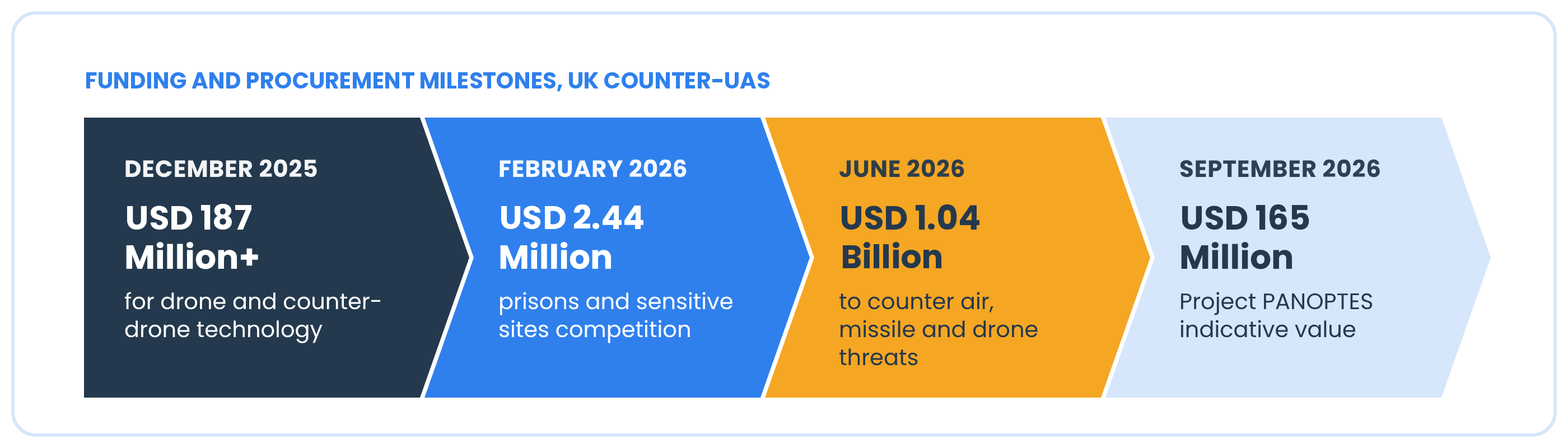
Figure 2: UK Counter-UAS Funding and Procurement Milestones
Source: Neargoal Consulting Analysis
Market Dynamics
Growth Drivers
- Defence Investment Plan. The plan, announced on 30 June 2026, commits more than USD 6.6 billion (GBP 5 billion) to drones and autonomous systems, with about USD 1.04 billion (GBP 790 million) earmarked for countering air, missile and drone threats and for homeland and overseas base protection.
- Homeland and Critical Infrastructure Threats. The 2018 Gatwick disruption closed the airport for about 36 hours and affected about 1,000 flights, and drone smuggling into prisons has led to a USD 46.2 million (GBP 35 million) package and 2026 exclusion zones around custodial sites.
- Lessons from Modern Conflict. Cheap, mass-produced drones have raised demand for equally low-cost defeat, pushing buyers toward radio-frequency, laser and interceptor options.
Restraints
- Restricted Defeat Authority. The Air Traffic Management and Unmanned Aircraft Act 2021 gives police powers over drones, but private operators cannot lawfully defeat drones, which limits commercial demand to detection.
- Budget Timing and Procurement Cycles. Staged competitions and funding approvals delay awards; the Project PANOPTES notice carries an indicative value of USD 165 million (GBP 125 million) excluding VAT and is subject to funding approval.
- Supply Chain and Integration. Mixed sensor and effector fleets raise integration risk, and several effectors are still in trials.
Opportunities
- Directed Energy. DragonFire laser programs have about USD 417 million (GBP 316 million) committed, with Type 45 destroyer integration targeted by the end of 2027.
- Command-and-Control Software. Digital targeting and orchestration platforms connect detection to defeat and are the connective layer across sites.
- Critical Infrastructure and Prisons. Defence Innovation funding of more than USD 187 million (GBP 142 million) in December 2025 for drone and counter-drone technology includes about USD 39.6 million (GBP 30 million) for homeland counter-drone work.
- Naval and Base Protection. Royal Navy ship protection and overseas base upgrades add platform-specific demand.
Policy and Regulatory Landscape
The Defence Investment Plan sets the investment frame, and the Strategic Defence Review set the priority for layered air and drone defence. The Air Traffic Management and Unmanned Aircraft Act 2021 gives police powers to require drones to land, issue penalties and stop and search, and the 2026 Drone Restriction Regulations set exclusion zones around custodial facilities in England and Wales, with fines up to USD 3,298 (GBP 2,500) and prison terms of up to two years for repeated or reckless breaches. The Civil Nuclear Constabulary can authorize counter-UAS action at licensed sites.
Segment Insights
By Technology, detection and tracking is the largest segment, since sensors are commercially open and widely deployed at airports and infrastructure. Defeat is restricted to government users. The full report quantifies each segment; the highlights below cover Defeat and Interdiction and End User.
By Defeat Method
Defeat systems include radio-frequency effectors, directed energy, interceptors and kinetic missiles. The Ministry of Defence has ordered Skyhammer counter-drone missiles for use against Shahed-type threats, while laser systems and radio-frequency directed energy are in trials. Our analysis expects low-cost-per-shot options to take a rising share of defeat spending from 2028F.
By End User
- Military. The largest buyer, led by Ministry of Defence programs for bases, ships and land forces.
- Homeland Security and Law Enforcement. Police, the Home Office and prison services buy detection and mitigation systems for sensitive sites.
- Critical Infrastructure. Airports, energy and nuclear sites that buy detection and rely on police-led response.
Geographic Insights
Demand is concentrated around military bases, major airports, ports and energy sites, and defence industrial clusters shape supply.
- England. Hosts most military bases, major airports and the principal supplier base, led by clusters in the South East and South West.
- Scotland. Naval bases and energy infrastructure drive maritime and critical-infrastructure demand.
- Wales and Northern Ireland. Smaller sites and custodial estates add demand for detection and exclusion-zone enforcement.
Competitive Landscape
Key participants include Leonardo UK, QinetiQ, MBDA UK, Thales UK, Chess Dynamics, Blighter Surveillance Systems, MARSS, Saab and DroneShield. Competition is shaped by security clearance, integration capability and cost per engagement. Leonardo UK leads Team Minerva integration, MBDA leads DragonFire, and Thales UK has demonstrated a radio-frequency directed-energy weapon in 2026 trials.
Leonardo UK | QinetiQ | MBDA UK | Thales UK |
Chess Dynamics | Blighter | MARSS | Saab |
DroneShield | BAE Systems | Babcock International | Cohort plc |
Key Developments, 2025-2026
- December 2025. UK Defence Innovation announces more than USD 187 million (GBP 142 million) for drone and counter-drone technology, with about USD 39.6 million (GBP 30 million) ringfenced for homeland counter-drone work.
- February 2026. A USD 2.44 million (GBP 1.85 million) competition for prisons and sensitive sites opens.
- June 2026. The Defence Investment Plan commits more than USD 6.6 billion (GBP 5 billion) to drones and autonomous systems and about USD 1.04 billion (GBP 790 million) to countering air, missile and drone threats.
- September 2026. Project PANOPTES is published with an indicative value of USD 165 million (GBP 125 million) excluding VAT.
What This Means for Decision-Makers
- Defence Buyers: Prioritize layered, open-architecture systems that integrate third-party sensors.
- Infrastructure Operators: Invest in detection and plan police-led response protocols.
- Suppliers: Secure clearance, UK partnerships and low cost per engagement early.
- Investors: Track staged awards and funding approvals, not headline plan values.
About the Report
Table 1: UK Counter-UAS Market: Report Coverage
Coverage Area | What the Report Covers |
Market Size and Forecast | Spending (USD Million) and Program Views, 2021-2031F |
Segmentation | Technology, Platform, End User and Region |
Geography | England, Scotland, Wales and Northern Ireland |
Competition | Primes, Specialist Suppliers, Awards and Program Tracking |
Policy and Regulation | Defence Investment Plan, Defeat Authority and Drone Restriction Rules |
Outlook and Recommendations | White-Space Assessment and Guidance by Stakeholder |
Source: Neargoal Consulting Analysis | |
The research report, UK Counter-UAS Market Outlook 2021-2031F - Market Size, Share, Trends, Opportunities, and Competitive Analysis - Segmented by Technology (Detection and Tracking, Defeat and Interdiction, and Command and Control); Platform (Fixed-Site, Mobile and Vehicle-Mounted, Naval, and Handheld); End User (Military, Homeland Security and Law Enforcement, and Critical Infrastructure); and Region, covers procured counter-UAS detection, defeat and command-and-control systems and related services in the UK, with a 2025 base year, a 2026E estimate and a 2027F-2031F forecast. It excludes unmanned aircraft themselves, general air defence missiles and non-drone threats. Market estimates and projections are based on Neargoal Consulting’s proprietary research methodology, exhaustive primary and secondary research.
For questions about report coverage, methodology, suitability, etc.
For requirements beyond the published report