
Saudi Arabia Defense Electronics Market Outlook 2021-2031F
Market Size, Share, Trends, Opportunities, and Competitive Analysis - Segmented by Technology (Radar and Electro-Optics, Electronic Warfare and Communications, and Command, Control and Mission Systems); Platform (Land, Air, and Naval and Space); Procurement Route (Imports, Local Production and Joint Ventures, and Sustainment and Services); and Region
Saudi Arabia Defense Electronics Market to Reach USD 4.7 Billion by 2031, Growing at a 19% CAGR: How Localization Targets, Joint Ventures and Autonomous Systems Are Reshaping Procurement

Saudi Arabia Defense Electronics Market Overview
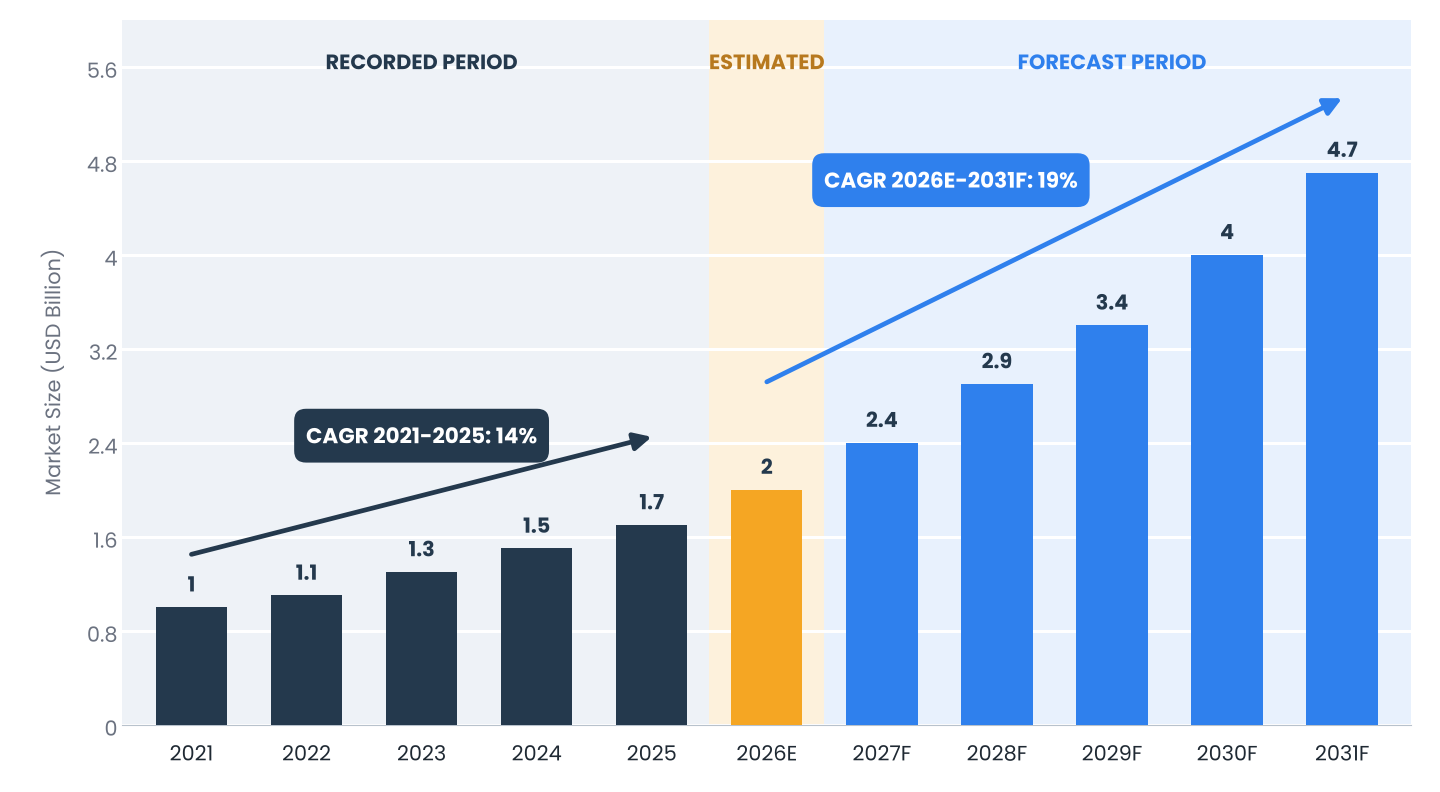
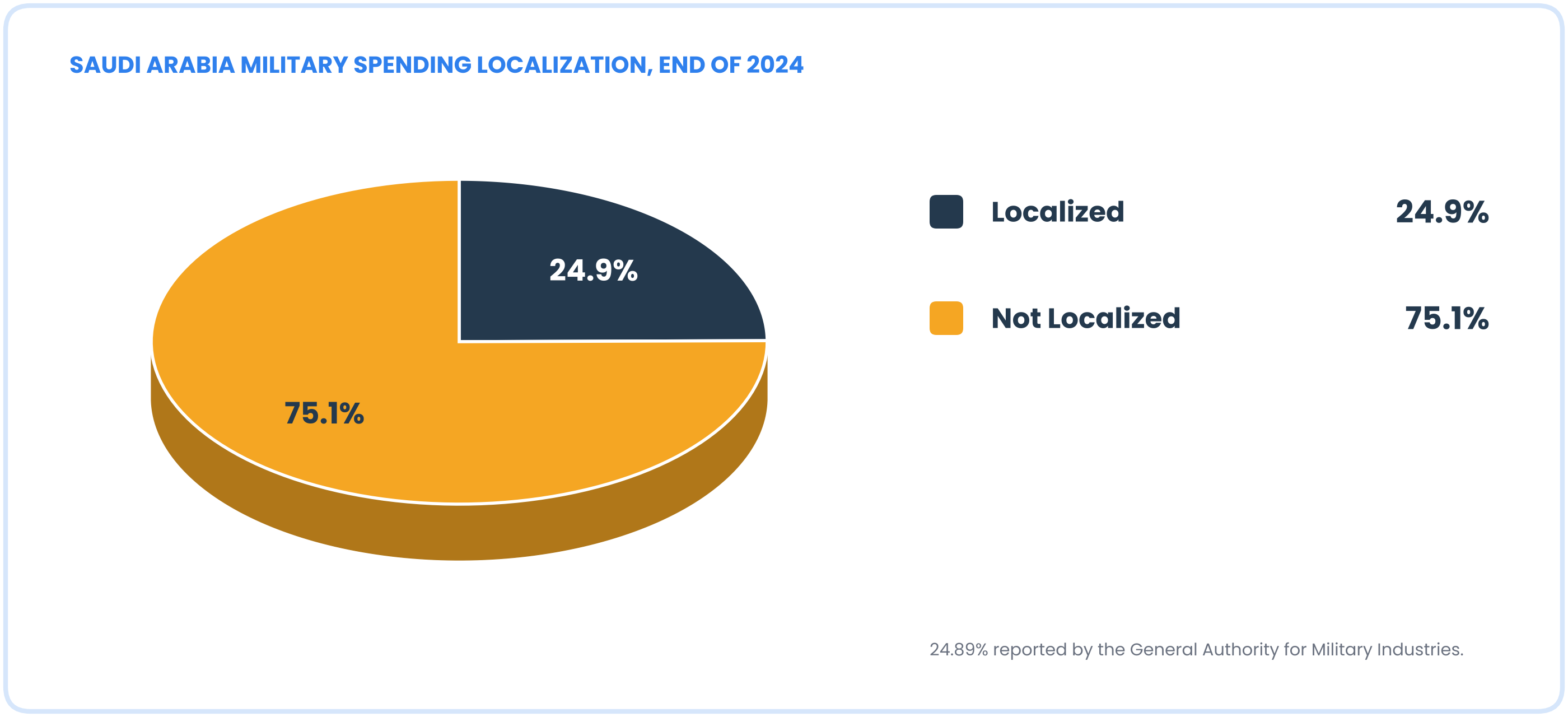
Saudi Arabia is moving from buying defense electronics to building them. Neargoal Consulting estimates the market at about USD 1.7 billion in 2025, rising to USD 2.0 billion in 2026E and USD 4.7 billion by 2031, a 19% CAGR over 2026E-2031F, after a 14% CAGR over 2021-2025. The General Authority for Military Industries reported that 24.89% of military spending was localized by the end of 2024, and Saudi Arabian Military Industries aims to localize more than 50% by 2030.
Key Takeaway Localization targets turn procurement into industrial partnership. Suppliers that offer technology transfer, local production and sustainment will win a growing share of electronics work, while pure export sales lose ground. |
Table 1: Saudi Arabia Defense Electronics Market: Key Insights
Metric | Finding |
Market Definition | Value of Radar, Electronic Warfare, Communications, Electro-Optics and Command and Control Systems Procured by Saudi Arabia (USD Billion) |
Base Year / Estimated Year | 2025 / 2026E |
Forecast Period | 2027F-2031F |
Market Size, 2025 | USD 1.7 Billion |
Market Size, 2026E | USD 2.0 Billion |
Market Size, 2031F | USD 4.7 Billion |
Recorded CAGR, 2021-2025 | 14% |
Forecast CAGR, 2026E-2031F | 19% |
Localization of Military Spending, End 2024 | 24.89% |
Localization Target, 2030 | More Than 50% |
New SAMI Subsidiaries, February 2026 | SAMI Land and SAMI Autonomous |
SAMI Agreements at World Defense Show 2026 | More Than 12 Memoranda of Understanding |
Leading Technology | Radar and Electro-Optics |
Fastest-Growing Segment | Local Production and Joint Ventures |
Key Constraints | Technology Transfer, Skills and Export Approvals |
Source: Neargoal Consulting Analysis | |
Market Outlook
Our study estimates the market will grow at a 19% forecast CAGR (2026E-2031F) from USD 2.0 billion in 2026E, after a 14% CAGR over 2021-2025. This is an estimate of electronics content within defense procurement, built on public localization and program information, because no public figure isolates electronics spending. The base case assumes localization rises toward the 2030 target and joint ventures take a growing share of work.
Figure 1: Saudi Arabia Defense Electronics Market Size, 2021-2031F (USD Billion)
Source: Neargoal Consulting Analysis
Market Dynamics
Growth Drivers
- Localization Targets. The General Authority for Military Industries reported 24.89% of military spending localized by the end of 2024, and Saudi Arabian Military Industries aims for more than 50% by 2030.
- State-Owned Industrial Platform. Saudi Arabian Military Industries launched SAMI Land and SAMI Autonomous in February 2026 and signed more than 12 memoranda of understanding at the World Defense Show.
- Vision 2030 Industrial Strategy. Defense localization is part of the national plan to build domestic industry and skills.
Restraints
- Technology Transfer and Export Approvals. Advanced electronics often depend on foreign suppliers and export licenses.
- Skills and Workforce. Engineering and manufacturing skills must scale with local production.
- Program Timing. Large procurements and joint ventures take years to move from agreement to production.
Opportunities
- Joint Ventures and Local Production. Partnerships that localize assembly, integration and testing.
- Autonomous Systems Electronics. Sensors, datalinks and control systems for the new autonomous systems company.
- Sustainment and Upgrades. Local maintenance, repair and overhaul of installed electronics.
- Small and Medium Enterprise Supply Chain. A local content platform connects smaller suppliers to large programs.
Policy and Regulatory Landscape
Saudi defense industrial policy is led by the General Authority for Military Industries, which regulates the sector and tracks localization, and by Saudi Arabian Military Industries as the national champion. Vision 2030 sets the localization goal, and procurement agreements increasingly carry local content and technology transfer obligations. Export licenses from supplier countries govern the supply of advanced electronics. The full report assesses how localization rules and export controls affect timing and supplier choice.
Segment Insights
The full report quantifies every segment; the highlights below cover Technology, Platform, and Procurement Route.
By Technology
Radar and electro-optics take the largest share, while communications and mission systems grow with network upgrades.
By Platform
Land systems carry growing electronics content as new vehicle programs add sensors and communications, while air platforms hold the highest value per system. Naval and space platforms add specialized radars and communications. Our analysis expects land and autonomous platforms to grow fastest, supported by new local programs.
By Procurement Route
- Imports. Direct purchases of finished systems from foreign suppliers.
- Local Production and Joint Ventures. Assembly, integration and production in the Kingdom, the fastest-growing route.
- Sustainment and Services. Maintenance, upgrades and training.
Geographic Insights
Activity concentrates around the capital and industrial sites where localization programs are located.
Figure 2: Saudi Arabia Military Spending Localization, End of 2024
Source: Neargoal Consulting Analysis
- Riyadh. Headquarters of the main defense bodies and the World Defense Show.
- Eastern Province. Industrial and naval infrastructure.
- Western Region. Air and naval installations and logistics.
- Industrial Cities. Sites for new localized manufacturing, including the SAMI Land Industrial Complex.
Competitive Landscape
Key participants include Saudi Arabian Military Industries, Saudi Advanced Electronics Company, Thales, RTX, Lockheed Martin, BAE Systems, Leonardo and Saab. Competition rests on technology transfer, local content commitments and sustainment capability. Foreign suppliers increasingly partner with Saudi entities to qualify for local production.
SAMI | Saudi Advanced Electronics Company | Thales | RTX |
Lockheed Martin | BAE Systems | Leonardo | Saab |
Key Developments, 2024-2026
- End of 2024. The General Authority for Military Industries reports 24.89% of military spending localized.
- February 2026. Saudi Arabian Military Industries launches SAMI Land and SAMI Autonomous at the World Defense Show.
- February 2026. The company signs more than 12 memoranda of understanding and shows more than 60 products.
- 2030. The localization target is more than 50% of the Kingdom's defense spending.
What This Means for Decision-Makers
- Foreign Suppliers: Offer technology transfer and local production to qualify for programs.
- Local Manufacturers: Build skills and test capability to move up the electronics value chain.
- Government Buyers: Link procurement to localization milestones.
- Investors: Track localization progress and joint venture formation.
About the Report
Table 2: Saudi Arabia Defense Electronics Market: Report Coverage
Coverage Area | What the Report Covers |
Market Size and Forecast | Value (USD Billion) and Localization Views, 2021-2031F |
Segmentation | Technology, Platform and Procurement Route |
Geography | Riyadh, Eastern Province, Western Region and Industrial Cities |
Competition | Local Champions, Foreign Suppliers and Joint Venture Tracking |
Policy and Constraints | Localization Rules, Export Licenses and Skills |
Outlook and Recommendations | Partnership Strategy and Guidance by Stakeholder |
Source: Neargoal Consulting Analysis | |
The research report, Saudi Arabia Defense Electronics Market Outlook 2021-2031F - Market Size, Share, Trends, Opportunities, and Competitive Analysis - Segmented by Technology (Radar and Electro-Optics, Electronic Warfare and Communications, and Command, Control and Mission Systems); Platform (Land, Air, and Naval and Space); Procurement Route (Imports, Local Production and Joint Ventures, and Sustainment and Services); and Region, covers radar, electronic warfare, communications, electro-optics and command and control systems procured by Saudi Arabia, with a 2025 base year, a 2026E estimate and a 2027F-2031F forecast. The scope is a working definition of electronics content in defense procurement. It excludes platforms without electronics content and civil electronics. Market estimates and projections are based on Neargoal Consulting’s proprietary research methodology, exhaustive primary and secondary research.
For questions about report coverage, methodology, suitability, etc.
For requirements beyond the published report