
India Electric Two-Wheelers Market Outlook 2021-2031F
Market Size, Share, Trends, Opportunities, and Competitive Analysis - Segmented by Vehicle Type (Scooters, Motorcycles, and Mopeds and Others); Battery Type (Lithium-Ion Fixed Battery, Swappable Battery, and Other Chemistries); Buyer Type (Private Buyers, Fleet and Delivery, and Shared Mobility); and Region
India Electric Two-Wheelers Market to Reach USD 5.6 Billion by 2031, Growing at a 22% CAGR: How Share Shifts, Subsidy Phase-Out and Incumbent Entry Are Reshaping the Market

India Electric Two-Wheelers Market Overview
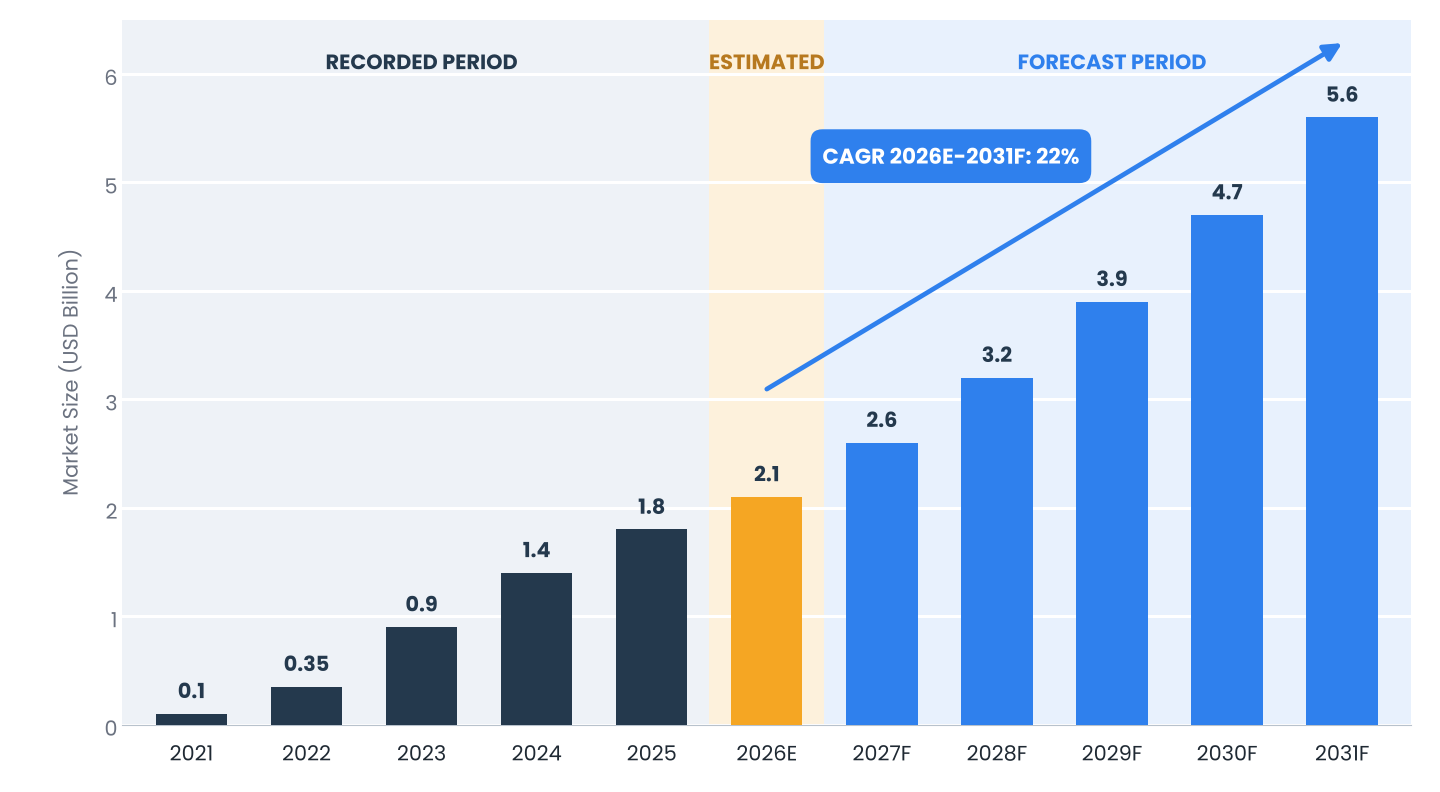
India's electric two-wheeler market is growing and being reshaped by incumbent manufacturers. Neargoal Consulting estimates the market at about USD 1.8 billion in 2025, rising to USD 2.1 billion in 2026E and USD 5.6 billion by 2031, a 22% CAGR over 2026E-2031F. Registrations rose 22% to about 1.40 million in FY2026, and penetration reached about 6.5% of two-wheeler sales, up from 5.8%.
Key Takeaway Growth is moving to established brands. TVS Motor, Bajaj Auto, Ather Energy and Hero MotoCorp captured most of the gain while Ola Electric lost share, so scale, service networks and financing matter as much as launch hype. |
India Electric Two-Wheelers Market at a Glance
MARKET DEFINITION Value of Electric Two-Wheeler Sales by Manufacturers in India at Ex-Factory Prices (USD Billion) | ||
BASE YEAR / ESTIMATED YEAR 2025 / 2026E | FORECAST PERIOD 2027F-2031F | |
MARKET SIZE, 2025 USD 1.8 Billion | MARKET SIZE, 2026E USD 2.1 Billion | |
MARKET SIZE, 2031F USD 5.6 Billion | FORECAST CAGR, 2026E-2031F 22% | |
FY2026 REGISTRATIONS About 1.40 Million, Up 22% | PENETRATION OF TWO-WHEELER SALES, FY2026 About 6.5%, Up from 5.8% | |
MARKET LEADER, FY2026 TVS Motor, 24.3% Share | MARCH 2026 REGISTRATIONS 190,941, Up 45% Year on Year | |
LEADING VEHICLE TYPE Scooters | FASTEST-GROWING SEGMENT Fleet and Delivery | |
KEY CONSTRAINTS Subsidy Phase-Out, Battery Cost and Charging Access | ||
Source: Neargoal Consulting Analysis | ||
Market Outlook
Our study estimates the market will grow at a 22% forecast CAGR (2026E-2031F) from USD 2.1 billion in 2026E. The base case assumes that penetration continues to rise as battery costs fall and incumbents expand, that subsidy phase-out slows growth briefly, and that fleet and delivery demand grows faster than private demand.
Figure 1: India Electric Two-Wheelers Market Size, 2021-2031F (USD Billion)
Source: Neargoal Consulting Analysis
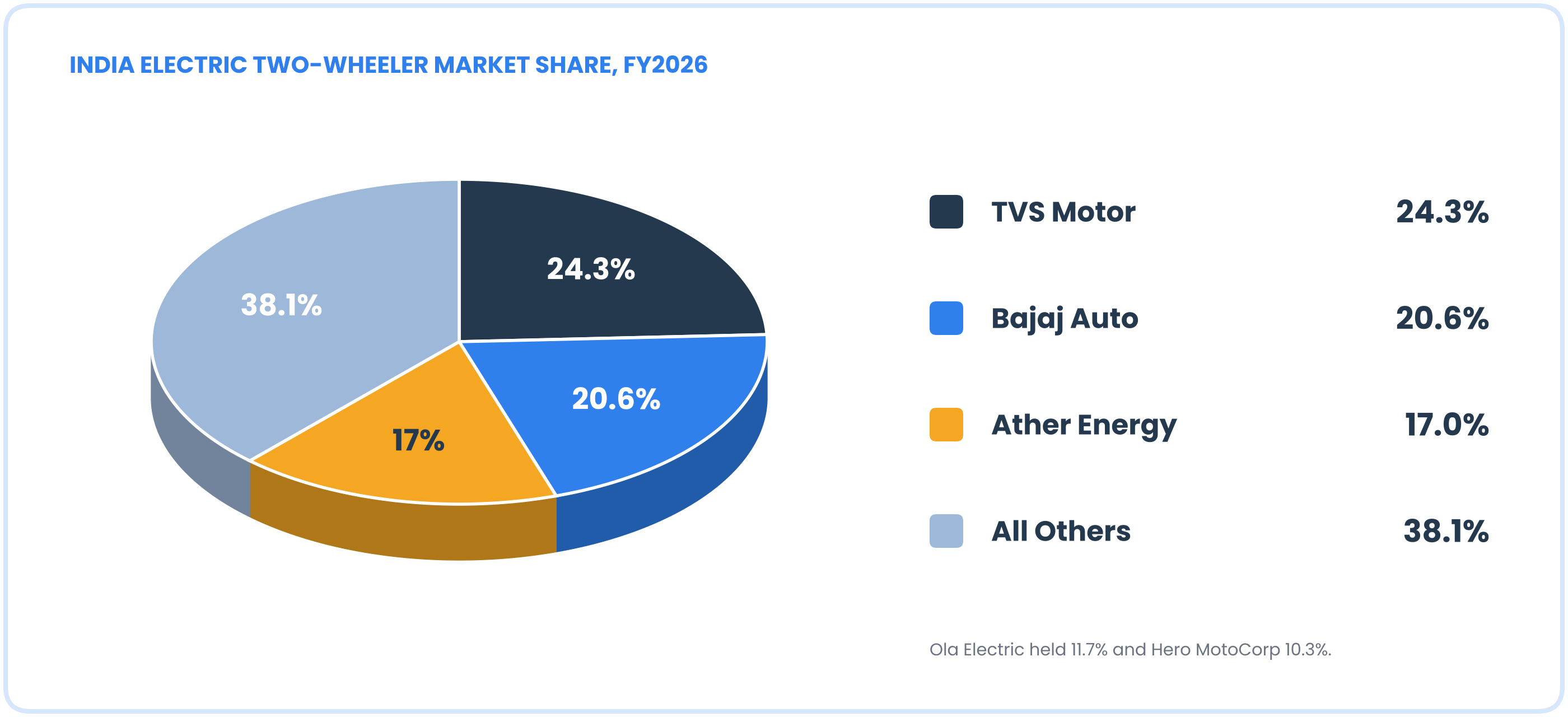
Figure 2: India Electric Two-Wheeler Market Share, FY2026
Source: Neargoal Consulting Analysis
Market Dynamics
Growth Drivers
- Rising Penetration. Electric two-wheelers reached about 6.5% of two-wheeler sales in FY2026, up from 5.8%, and March 2026 registrations of 190,941 were up 45% year on year.
- Incumbent Manufacturer Entry. TVS Motor, Bajaj Auto and Hero MotoCorp have scaled, bringing distribution, service and financing networks.
- Lower Running Costs and Policy Support. Subsidies under PM E-DRIVE, and earlier FAME, supported adoption by lowering purchase prices.
Restraints
- Subsidy Phase-Out. Support for electric two-wheelers is being phased out, which raises purchase prices.
- Battery Cost and Supply. Cell supply and import dependence affect prices and margins.
- Charging Access and Resale Values. Charging at home is not available to all buyers, and resale values are uncertain.
Opportunities
- Fleet and Delivery. Commercial users value low running costs.
- Affordable Models. Entry-level scooters and motorcycles broaden the buyer base.
- Battery Swapping and Financing. Swapping and battery-as-a-service lower upfront cost.
- Domestic Cell and Component Supply. Local content reduces import dependence.
Policy and Regulatory Landscape
Electric two-wheeler policy rests on central incentives under PM E-DRIVE and earlier FAME schemes, state subsidies and road tax waivers, and production-linked incentives for advanced batteries and vehicles. Local content rules tie incentives to domestic manufacturing. Safety and battery standards govern product approval. The full report assesses how subsidy design, local content and standards affect prices and manufacturer strategy.
Segment Insights
The full report quantifies every segment; the highlights below cover Vehicle Type, Battery Type, and Buyer Type.
By Vehicle Type
Scooters take the largest share, while motorcycles are the next growth area.
By Battery Type
Fixed lithium-ion batteries dominate sales because they suit most private buyers. Swappable batteries serve fleet and delivery users who need fast turnaround and suit battery-as-a-service pricing. Other chemistries are at an early stage. Our analysis expects swappable batteries to gain share in commercial use through 2031F.
By Buyer Type
- Private Buyers. The largest group, sensitive to price and service access.
- Fleet and Delivery. Commercial users focused on cost per kilometer.
- Shared Mobility. Rental and sharing operators.
Geographic Insights
Adoption is strongest in southern and western India and in large cities, and is broadening.
- Southern India. Early adoption and manufacturing bases.
- Western India. Large urban markets with strong incentives.
- Northern India. Large markets with growing charging access.
- Eastern and Central India. Emerging demand from a lower base.
Competitive Landscape
Key participants include TVS Motor, Bajaj Auto, Ather Energy, Ola Electric, Hero MotoCorp, Greaves Electric, Ultraviolette and Honda Motorcycle and Scooter India. In FY2026 TVS Motor led with 340,758 units and a 24.3% share, Bajaj Auto had 20.6%, Ather Energy 17%, Ola Electric 11.7% and Hero MotoCorp 10.3%. Competition rests on price, range, service and financing.
TVS Motor | Bajaj Auto | Ather Energy | Ola Electric |
Hero MotoCorp | Greaves Electric | Ultraviolette | Honda Motorcycle |
Key Developments, FY2026
- FY2026. Electric two-wheeler registrations rise 22% to about 1.40 million.
- FY2026. Penetration reaches about 6.5% of two-wheeler sales, up from 5.8%.
- FY2026. TVS Motor takes the lead with a 24.3% share, and Hero MotoCorp nearly triples volumes.
- March 2026. Registrations reach 190,941, up 45% year on year and 70% on the previous month.
What This Means for Decision-Makers
- Manufacturers: Invest in service networks and financing, not only product launches.
- Fleet Operators: Compare total cost per kilometer across battery types.
- Policymakers: Plan subsidy phase-out to avoid demand shocks.
- Investors: Track share shifts and profitability, not registrations alone.
About the Report
Table 1: India Electric Two-Wheelers Market: Report Coverage
Coverage Area | What the Report Covers |
Market Size and Forecast | Revenue (USD Billion) and Unit Views, 2021-2031F |
Segmentation | Vehicle Type, Battery Type and Buyer Type |
Geography | Southern, Western, Northern, and Eastern and Central India |
Competition | Manufacturers, Share Shifts and Registration Tracking |
Policy and Constraints | Subsidies, Battery Cost and Charging Access |
Outlook and Recommendations | Strategy by Stakeholder |
Source: Neargoal Consulting Analysis | |
The research report, India Electric Two-Wheelers Market Outlook 2021-2031F - Market Size, Share, Trends, Opportunities, and Competitive Analysis - Segmented by Vehicle Type (Scooters, Motorcycles, and Mopeds and Others); Battery Type (Lithium-Ion Fixed Battery, Swappable Battery, and Other Chemistries); Buyer Type (Private Buyers, Fleet and Delivery, and Shared Mobility); and Region, covers sales of electric two-wheelers by manufacturers in India, with a 2025 base year, a 2026E estimate and a 2027F-2031F forecast. It excludes electric three-wheelers, bicycles and conventional two-wheelers. Market estimates and projections are based on Neargoal Consulting’s proprietary research methodology, exhaustive primary and secondary research.
For questions about report coverage, methodology, suitability, etc.
For requirements beyond the published report