
India Semiconductor Packaging (OSAT) Market Outlook 2021-2031F
Market Size, Share, Trends, Opportunities, and Competitive Analysis - Segmented by Package Type (Legacy Packages, Advanced Packages, and Memory Assembly and Test); End Use (Automotive and Industrial, Consumer Electronics and Telecom, and Computing and Others); Ownership (Joint Ventures, Global Chipmakers, and Domestic Groups); and Region
India Semiconductor Packaging (OSAT) Market to Reach USD 3.8 Billion by 2031, Growing at a 57% CAGR: How First Plants, Mission Incentives and Joint Ventures Are Building a Packaging Base

India Semiconductor Packaging (OSAT) Market Overview
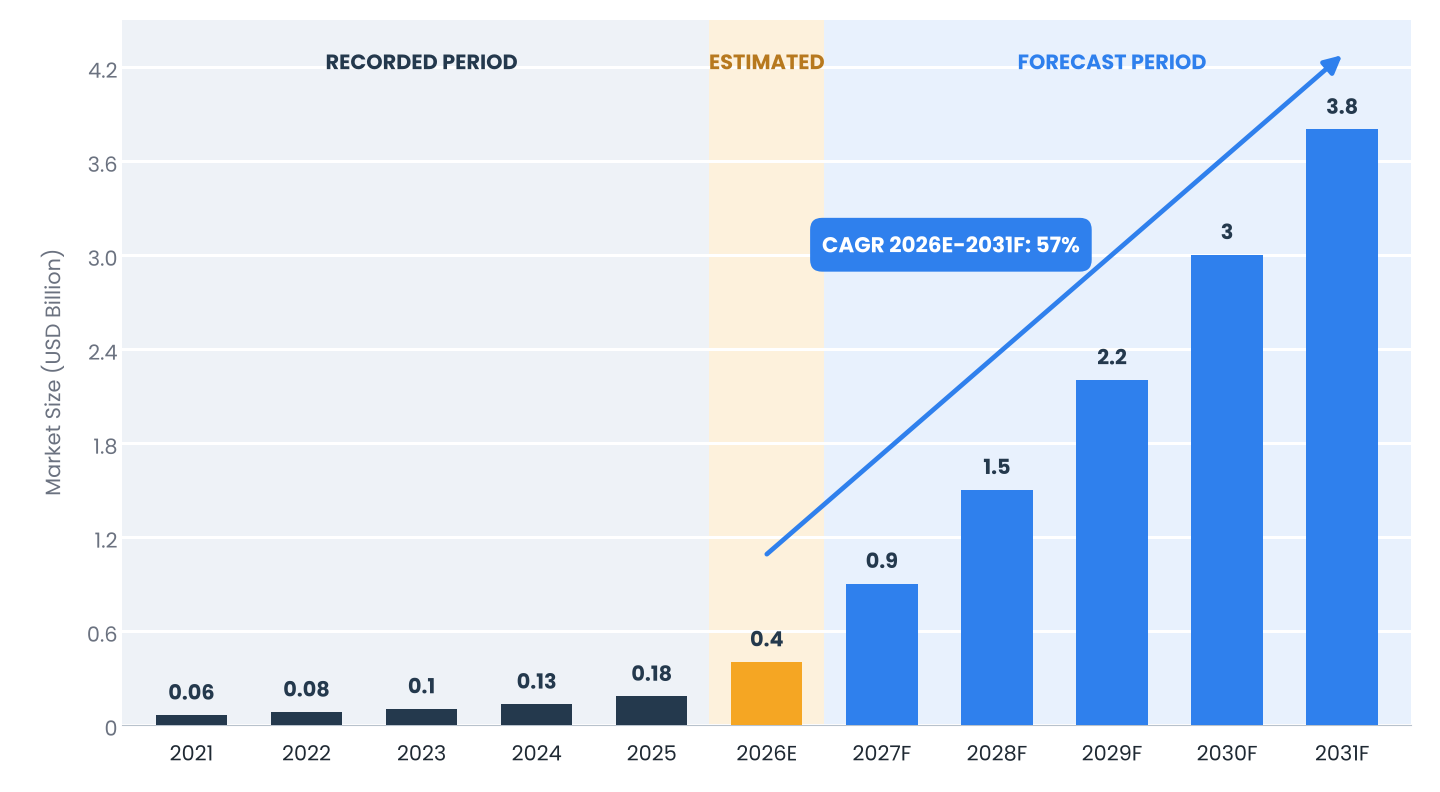
India has moved from announcements to operating semiconductor packaging plants. Neargoal Consulting estimates the market at about USD 0.18 billion in 2025, rising to USD 0.4 billion in 2026E and USD 3.8 billion by 2031, a 57% CAGR over 2026E-2031F, from a very small base. Micron began assembly and test operations in February 2026, Kaynes Semicon began production in March 2026, and CG Semi's Sanand plant was inaugurated for commercial production on 4 July 2026.
Key Takeaway The first plants prove that packaging can be built in India, but scale depends on customers and supply chains. Operators that win design wins from automotive, industrial and consumer customers, and secure substrates and materials, will move from pilot output to volume. |
Table 1: India Semiconductor Packaging (OSAT) Market: Key Insights
Metric | Finding |
Market Definition | Value of Semiconductor Assembly, Packaging and Test Services Revenue from Facilities in India (USD Billion) |
Base Year / Estimated Year | 2025 / 2026E |
Forecast Period | 2027F-2031F |
Market Size, 2025 | USD 0.18 Billion |
Market Size, 2026E | USD 0.4 Billion |
Market Size, 2031F | USD 3.8 Billion |
Forecast CAGR, 2026E-2031F | 57% |
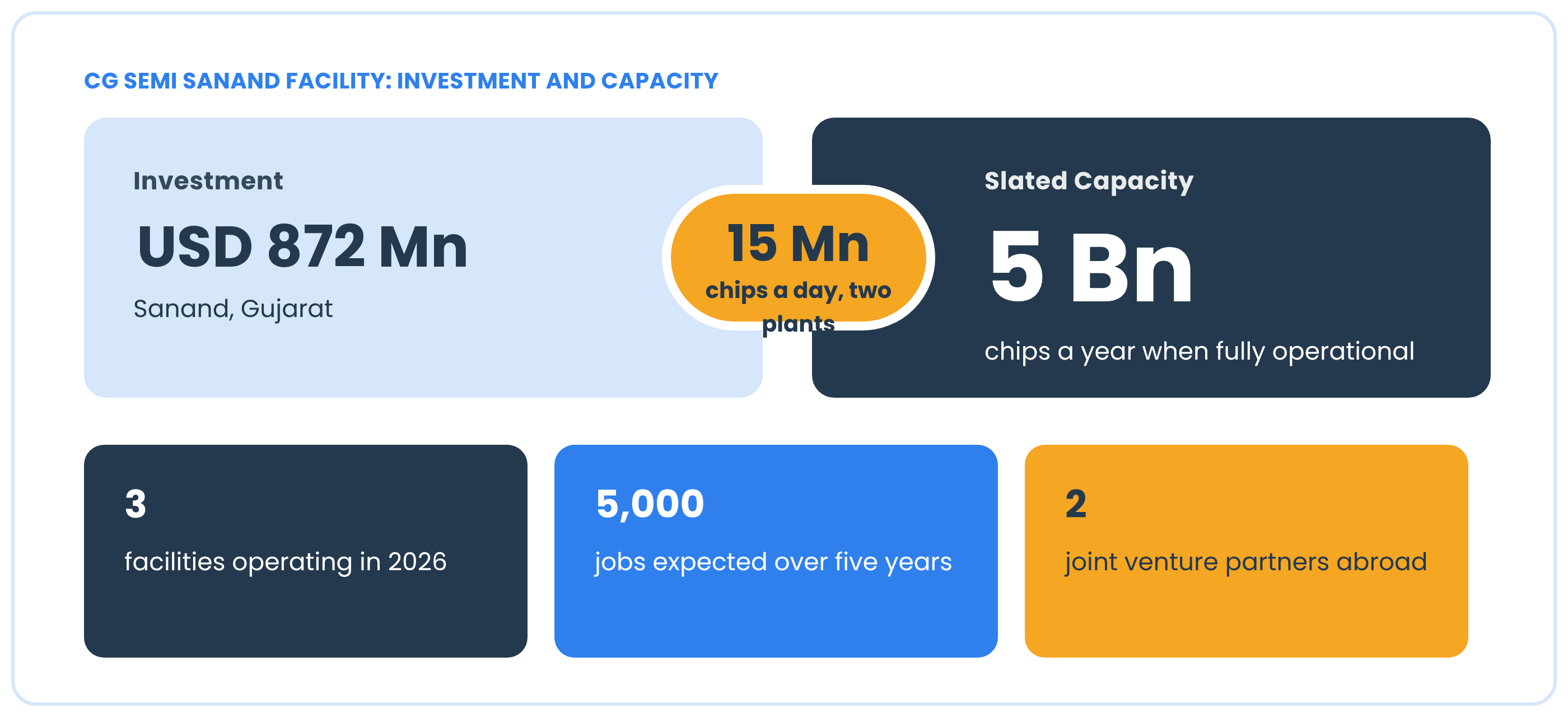
CG Semi Sanand Investment | USD 872 Million |
CG Semi Commercial Production | Inaugurated 4 July 2026 |
Micron Assembly and Test Operations | Began February 2026 |
Kaynes Semicon Production | Began March 2026 |
Leading Package Type | Legacy Packages |
Fastest-Growing Segment | Advanced Packages |
Key Constraints | Skills, Substrate and Material Supply, and Yield Ramp |
Source: Neargoal Consulting Analysis | |
Market Outlook
Our study estimates the market will grow at a 57% forecast CAGR (2026E-2031F) from USD 0.4 billion in 2026E, from a very small base. The base case assumes that the three facilities ramp yields and customer qualifications through 2027F, that additional approved plants add capacity from 2028F, and that legacy packages lead volume while advanced packages take a rising share of value.
Figure 1: India Semiconductor Packaging (OSAT) Market Size, 2021-2031F (USD Billion)
Source: Neargoal Consulting Analysis
Figure 2: CG Semi Sanand Facility: Investment and Capacity
Source: Neargoal Consulting Analysis
Market Dynamics
Growth Drivers
- India Semiconductor Mission. The Union Cabinet approved CG Semi's project in February 2024 under the India Semiconductor Mission, and further units have been approved.
- First Operating Plants. Micron began assembly and test operations in February 2026, and Kaynes Semicon began production in March 2026, ahead of CG Semi's commercial start in July 2026.
- Joint Venture Technology Partners. CG Semi's joint venture includes Renesas Electronics of Japan and Stars Microelectronics of Thailand.
Restraints
- Skills and Workforce. Packaging requires trained process and equipment engineers, and the workforce is being built.
- Material and Substrate Supply. Substrates, lead frames and chemicals are largely imported.
- Yield Ramp and Customer Qualification. New plants need time to reach yields and win customer approval.
Opportunities
- Legacy Packages for Automotive and Industrial Customers. QFN and QFP packages serve large volume markets.
- Advanced Packages. Flip-chip packages such as FC-BGA and FC-CSP offer higher value.
- Substrate and Materials Supply. Local supply of lead frames, substrates and chemicals.
- Test and Equipment Services. Testing, handlers and maintenance for operating plants.
Policy and Regulatory Landscape
The India Semiconductor Mission offers fiscal support for semiconductor and display projects, and approvals are made by the Union Cabinet. State governments, including Gujarat and Assam, add land, power and water support. Customs and trade rules affect imports of equipment and materials. The full report assesses how incentives, state policy and trade rules affect cost and timing.
Segment Insights
The full report quantifies every segment; the highlights below cover Package Type, End Use, and Ownership.
By Package Type
Legacy packages take the largest share of volume, while advanced packages grow fastest in value.
By End Use
Automotive and industrial customers are the largest early users because legacy packages suit power, control and sensor chips. Consumer electronics and telecom add volume as device makers localize, while computing and other uses depend on advanced packages. Our analysis expects automotive and industrial demand to anchor early volume.
By Ownership
- Joint Ventures. Partnerships between domestic groups and global technology holders.
- Global Chipmakers. Facilities owned by international chip companies.
- Domestic Groups. Indian electronics and industrial groups building packaging capacity.
Geographic Insights
Early capacity is concentrated in Gujarat, with Assam and other states adding projects.
- Gujarat. Home to the first operating plants, including Sanand.
- Assam. A project approved under the mission.
- Uttar Pradesh and Northern India. Electronics manufacturing clusters.
- Southern India. Design talent and electronics demand.
Competitive Landscape
Key participants include CG Semi, Micron, Kaynes Semicon, Tata Electronics, Renesas Electronics, Stars Microelectronics, Suchi Semicon and Crystal Matrix. Competition rests on technology partners, customer qualification, yield and cost. Joint ventures link local capital with global process know-how.
CG Semi | Micron | Kaynes Semicon | Tata Electronics |
Renesas Electronics | Stars Microelectronics | Suchi Semicon | Crystal Matrix |
Key Developments, 2024-2026
- February 2024. The Union Cabinet approves CG Semi's project under the India Semiconductor Mission.
- February 2026. Micron begins assembly and test operations at Sanand.
- March 2026. Kaynes Semicon begins production at its Sanand facility.
- 4 July 2026. CG Semi's USD 872 million (INR 76 billion) facility is inaugurated for commercial production.
What This Means for Decision-Makers
- Operators: Win customer qualifications early and plan yield ramps carefully.
- Equipment and Material Suppliers: Localize service and supply close to Sanand and other clusters.
- Customers: Qualify local packaging for automotive and industrial parts.
- Investors: Track yield, utilization and customer wins, not only capacity.
About the Report
Table 2: India Semiconductor Packaging (OSAT) Market: Report Coverage
Coverage Area | What the Report Covers |
Market Size and Forecast | Revenue (USD Billion) and Capacity Views, 2021-2031F |
Segmentation | Package Type, End Use and Ownership |
Geography | Gujarat, Assam, Northern India and Southern India |
Competition | Operators, Joint Ventures and Plant Tracking |
Policy and Constraints | Mission Incentives, Skills and Material Supply |
Outlook and Recommendations | Capacity Ramp Assessment and Guidance by Stakeholder |
Source: Neargoal Consulting Analysis | |
The research report, India Semiconductor Packaging (OSAT) Market Outlook 2021-2031F - Market Size, Share, Trends, Opportunities, and Competitive Analysis - Segmented by Package Type (Legacy Packages, Advanced Packages, and Memory Assembly and Test); End Use (Automotive and Industrial, Consumer Electronics and Telecom, and Computing and Others); Ownership (Joint Ventures, Global Chipmakers, and Domestic Groups); and Region, covers semiconductor assembly, packaging and test services revenue from facilities located in India, with a 2025 base year, a 2026E estimate and a 2027F-2031F forecast. It excludes wafer fabrication, chip design and imported packaged chips. Market estimates and projections are based on Neargoal Consulting’s proprietary research methodology, exhaustive primary and secondary research.
For questions about report coverage, methodology, suitability, etc.
For requirements beyond the published report