
Canada Solid-State Battery Market Outlook 2021-2031F
Market Size, Share, Trends, Opportunities, and Competitive Analysis - Segmented by Electrolyte Type (Polymer, Sulfide, and Oxide and Others); Application (Electric Vehicles, Grid and Stationary Storage, and Consumer and Industrial); Value Chain Stage (Materials and Components, and Cells and Packs); and Region
Canada Solid-State Battery Market to Reach USD 95 Million by 2031, Growing at a 51% CAGR: How Hydro-Québec Research, Federal Funding and Anode Pilot Lines Are Building a Domestic Supply Chain

Canada Solid-State Battery Market Overview
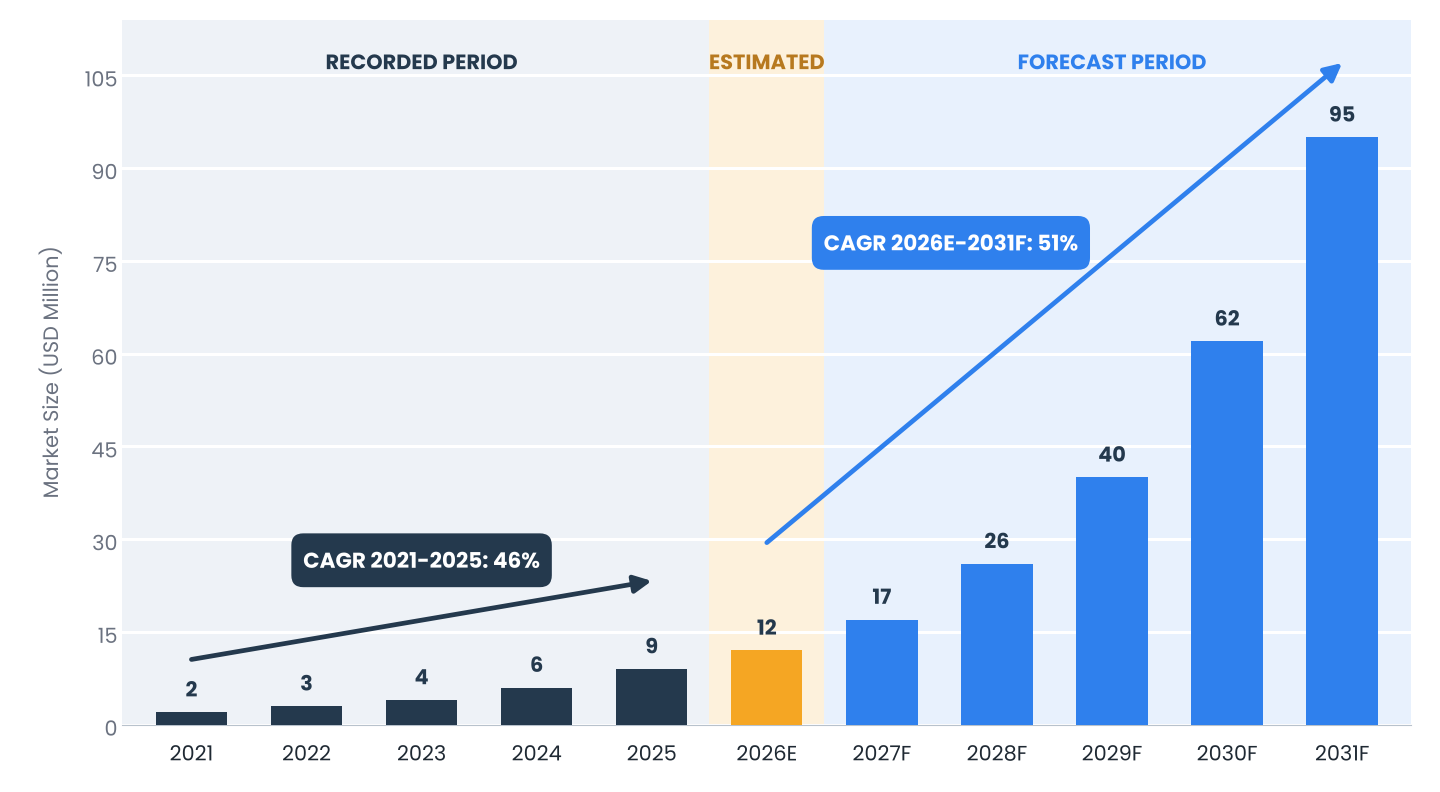
Canada’s solid-state battery market is small, but its research base and critical minerals give it a place in the supply chain. Neargoal Consulting estimates the market at about USD 9 million in 2025, rising to USD 12 million in 2026E and USD 95 million by 2031, a 51% CAGR over 2026E-2031F, after a 46% CAGR over 2021-2025 from a very small base. Hydro-Québec entered battery research and development in 2018 with a focus on solid-state technology, partnered with Mercedes-Benz in 2020, and in April 2026 EcoPro Innovation received USD 4.29 million (CAD 6 million) from the federal government for a lithium-metal anode pilot line.
Key Takeaway Canada’s role is more likely to be materials, research and licensed technology than high-volume cell production in the near term. Early revenue will come from pilot lines and specialty materials, while volume depends on a domestic automotive anchor customer and competition with Asian cell makers. |
Table 1: Canada Solid-State Battery Market: Key Insights
Metric | Finding |
Market Definition | Value of Solid-State Battery Cells, Packs and Key Materials Produced and Sold in Canada (USD Million) |
Base Year / Estimated Year | 2025 / 2026E |
Forecast Period | 2027F-2031F |
Market Size, 2025 | USD 9 Million |
Market Size, 2026E | USD 12 Million |
Market Size, 2031F | USD 95 Million |
Recorded CAGR, 2021-2025 | 46% |
Forecast CAGR, 2026E-2031F | 51% |
Federal Grant to EcoPro Innovation | USD 4.29 Million, Reported April 2026 |
Lithium-Metal Anode Pilot Line | Completion Targeted for March 2027 |
Hydro-Québec Battery R&D Start | 2018, With Solid-State Focus |
Hydro-Québec Partner | Mercedes-Benz, Announced 2020 |
Claimed Anode Energy Density | Up to 10 Times Graphite |
Leading Electrolyte Type | Polymer |
Key Constraints | Cost, Scale and Limited Domestic Cell Demand |
Source: Neargoal Consulting Analysis | |
Market Outlook
Our study estimates the market will grow at a 51% forecast CAGR (2026E-2031F) from USD 12 million in 2026E, after a 46% CAGR over 2021-2025 from a very small base. The base case assumes pilot-scale activity through 2027F, with the EcoPro Innovation lithium-metal anode pilot line targeted for completion in March 2027 and first commercial material volumes in 2028F. Lithium-metal anodes are claimed to offer up to ten times the energy density of graphite and extend electric vehicle range by 30-40%, claims that remain to be proven at scale.
Figure 1: Canada Solid-State Battery Market Size, 2021-2031F (USD Million)
Source: Neargoal Consulting Analysis
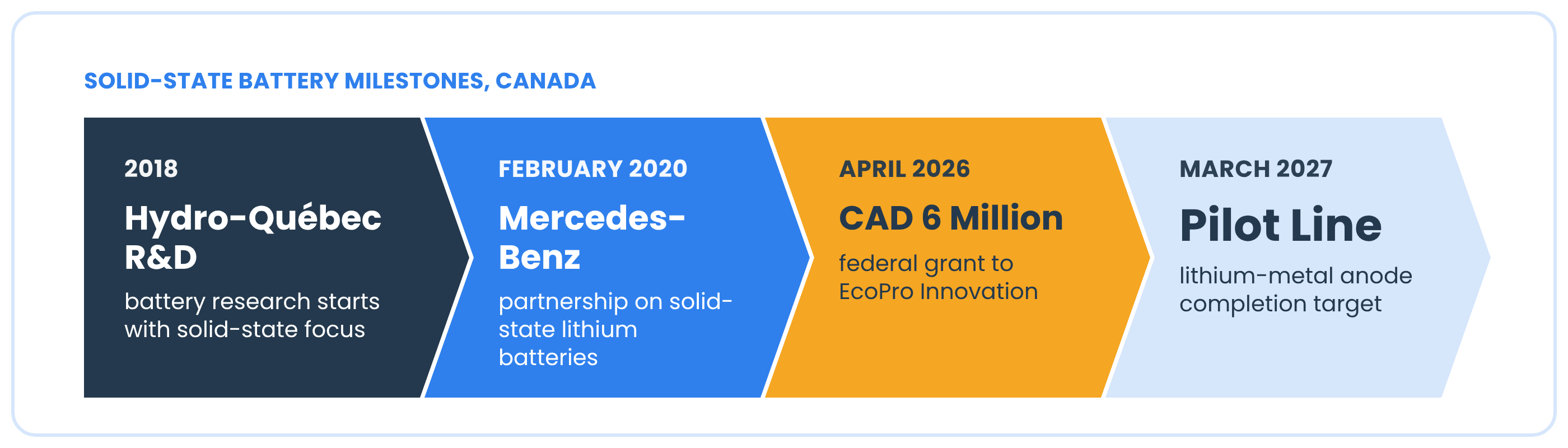
Figure 2: Canada Solid-State Battery Milestones
Source: Neargoal Consulting Analysis
Market Dynamics
Growth Drivers
- Hydro-Québec Research Base. Hydro-Québec entered battery research and development in 2018, emphasizing solid-state technology, and has partnered with Mercedes-Benz and licensed its technology internationally.
- Federal Funding for the Supply Chain. The Energy Innovation Program supports a domestic solid-state battery supply chain, with USD 4.29 million (CAD 6 million) to EcoPro Innovation and a USD 1.07 million (CAD 1.5 million) grant to Volta Energy for PFAS-free solid-state technology.
- Automotive Plants and Critical Minerals. Canada’s electric vehicle battery plants and critical minerals strategy create potential customers and feedstock for materials suppliers.
Restraints
- Cost and Scale. Solid-state batteries are expensive and unproven at volume, and the main cell makers are in Asia.
- Limited Domestic Cell Production. Canada has few large solid-state cell programs, so revenue relies on materials, licensing and pilots.
- Small Domestic Market. Canada’s market is small, and growth depends on exports to the US and Europe.
Opportunities
- Lithium-Metal Anode Materials. EcoPro Innovation’s full-scale lithium-metal anode pilot line in Canada, targeted for March 2027, serves solid-state cell makers.
- Technology Licensing. Hydro-Québec has licensed its solid-state technology, creating a route for royalties and partnerships.
- Polymer and Specialty Electrolytes. Canadian developers work on polymer electrolytes and PFAS-free chemistries.
- Critical Minerals Processing. Lithium and nickel processing in Canada can support local cell and materials supply chains.
Policy and Regulatory Landscape
Canada supports battery supply chains through Natural Resources Canada’s Energy Innovation Program, which funded EcoPro Innovation, and through grants for research and demonstration. Federal and provincial investment incentives, a critical minerals strategy and Québec’s battery strategy support materials and manufacturing. Electric vehicle targets and trade rules with the US shape demand and export prospects. The full report assesses how funding, trade and procurement rules affect timing.
Segment Insights
The full report quantifies every segment; the highlights below cover Electrolyte Type, Application, and Value Chain Stage.
By Electrolyte Type
Polymer systems have a long research history in Canada, while sulfide and oxide systems follow Asian leaders.
By Application
Electric vehicles are the main long-term application, supported by Hydro-Québec’s work with Mercedes-Benz. Grid and stationary storage is a second application where safety and longevity matter, and consumer and industrial uses are smaller. Our analysis expects revenue before 2028F to come from pilot programs, research contracts and materials.
By Value Chain Stage
- Materials and Components. Lithium-metal anodes, electrolytes and specialty materials, the earliest commercial segment.
- Cells and Packs. Pilot-scale cells and licensed production, dependent on automotive partners.
Geographic Insights
Activity centers on Québec’s research base and Ontario’s automotive cluster.
- Québec. Home to Hydro-Québec’s research and licensing activity, and to lithium-metal polymer battery makers.
- Ontario. Hosts the automotive manufacturing cluster and battery plants that could be early customers.
- Other Provinces. Early-stage developers, universities and mining regions supplying critical minerals.
Competitive Landscape
Key participants include Hydro-Québec, Mercedes-Benz, EcoPro Innovation, Blue Solutions, Volta Energy and Dongshi Kingpower, with Samsung SDI, Toyota and CATL as international competitors. Competition rests on technology readiness, funding and customer partnerships. EcoPro Innovation runs a 40-tonne solid-electrolyte pilot in Ochang, South Korea, and partners with Hydro-Québec.
Hydro-Québec | Mercedes-Benz | EcoPro Innovation | Blue Solutions |
Volta Energy | Dongshi Kingpower |
Key Developments, 2018-2027
- 2018. Hydro-Québec enters battery research and development with an emphasis on solid-state technology.
- February 2020. Hydro-Québec and Mercedes-Benz announce a partnership on solid-state lithium batteries.
- April 2026. EcoPro Innovation receives USD 4.29 million (CAD 6 million) from the federal government for a lithium-metal anode pilot line.
- March 2027. The lithium-metal anode pilot line in Canada is targeted for completion.
What This Means for Decision-Makers
- Researchers and Developers: Pursue licensing and pilot partnerships with global cell makers.
- Materials Suppliers: Qualify lithium-metal anodes and electrolytes with cell makers.
- Automakers: Use Canadian pilots to de-risk supply for later programs.
- Policymakers: Link funding to pilot-line milestones and customer commitments.
About the Report
Table 2: Canada Solid-State Battery Market: Report Coverage
Coverage Area | What the Report Covers |
Market Size and Forecast | Revenue (USD Million) and Pilot Capacity Views, 2021-2031F |
Segmentation | Electrolyte Type, Application, Value Chain Stage and Province |
Geography | Québec, Ontario and Other Provinces |
Competition | Researchers, Materials Suppliers, Cell Makers and Pilot Line Tracking |
Policy and Funding | Energy Innovation Program, Provincial Strategies and Trade Rules |
Outlook and Recommendations | White-Space Assessment and Guidance by Stakeholder |
Source: Neargoal Consulting Analysis | |
The research report, Canada Solid-State Battery Market Outlook 2021-2031F - Market Size, Share, Trends, Opportunities, and Competitive Analysis - Segmented by Electrolyte Type (Polymer, Sulfide, and Oxide and Others); Application (Electric Vehicles, Grid and Stationary Storage, and Consumer and Industrial); Value Chain Stage (Materials and Components, and Cells and Packs); and Region, covers solid-state battery cells, packs and key materials produced and sold in Canada, with a 2025 base year, a 2026E estimate and a 2027F-2031F forecast. It excludes conventional lithium-ion cells, semi-solid-state cells and research funding. Market estimates and projections are based on Neargoal Consulting’s proprietary research methodology, exhaustive primary and secondary research.
For questions about report coverage, methodology, suitability, etc.
For requirements beyond the published report