US GLP-1 Weight-Loss Drugs Market Outlook 2021-2031F
Market Size, Share, Trends, Opportunities, and Competitive Analysis - Segmented by Molecule (Semaglutide, Tirzepatide, and Others); Route of Administration (Injectable and Oral); Distribution Channel (Retail and Specialty Pharmacies, Direct-to-Consumer and Telehealth, and Hospital Pharmacies); and Region
US GLP-1 Weight-Loss Drugs Market to Reach USD 75 Billion by 2031, Growing at a 20% CAGR: How Oral Pills, Medicare Coverage and Falling Cash Prices Are Opening the Next Wave of Demand

US GLP-1 Weight-Loss Drugs Market Overview
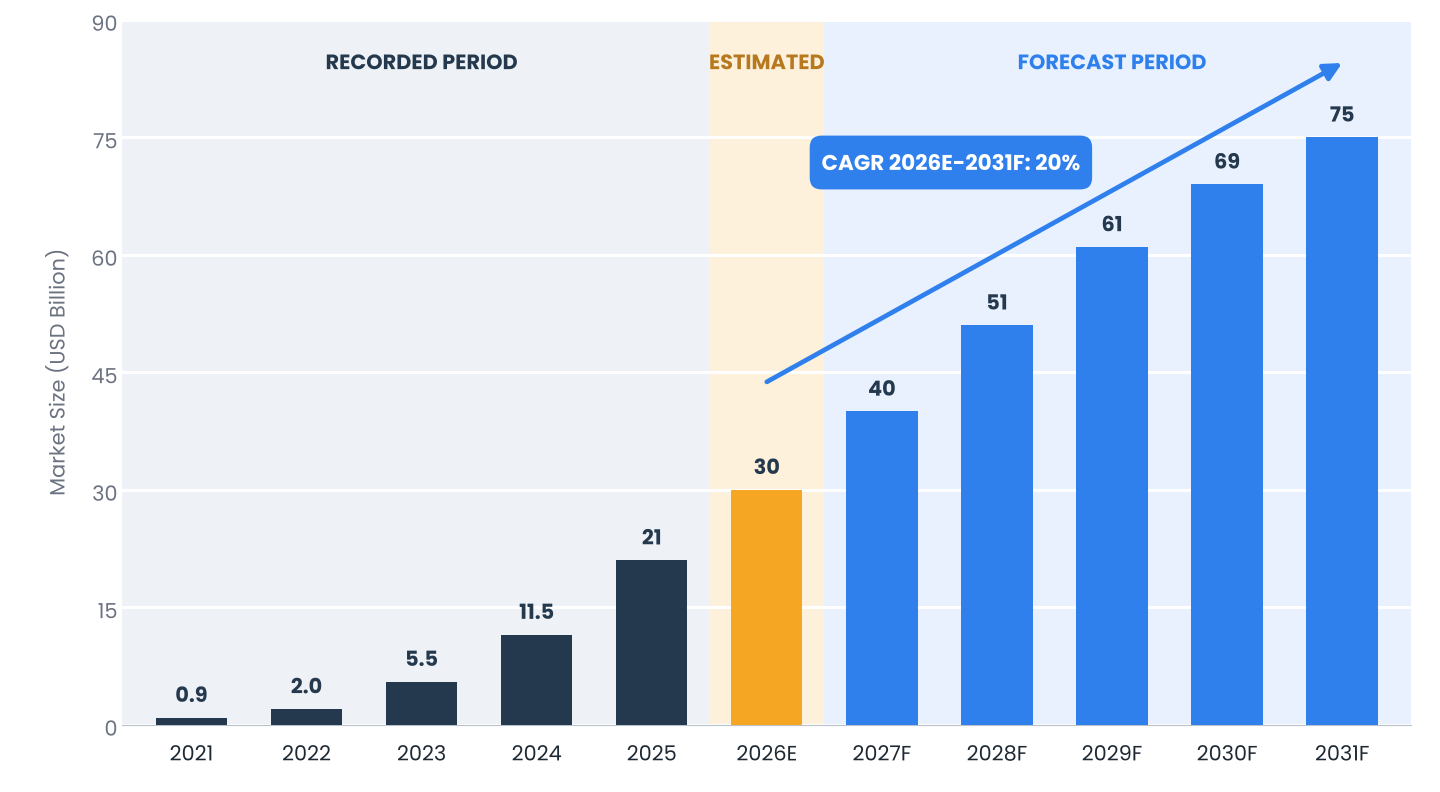
Obesity affected about 40% of US adults in 2021-2023, and GLP-1 medicines have become the first drug class able to treat it at scale. Neargoal Consulting estimates the US GLP-1 weight-loss drugs market at about USD 21 billion in 2025, rising to USD 30 billion in 2026E and USD 75 billion by 2031, a 20% CAGR over 2026E-2031F. Growth is shifting from a supply-constrained, injection-led market toward one shaped by oral pills, Medicare coverage from July 2026 and lower cash prices, with volume rising faster than revenue per patient. The research report quantifies the market by Molecule, Route of Administration, Distribution Channel and Region, and shows where the next patients will come from.
Key Takeaway Revenue growth will slow from the 2021-2025 surge as prices fall, but patient numbers will keep rising as oral pills and Medicare coverage widen access. Manufacturers and payers that plan around price-for-volume trade-offs will capture the most value. |
Table 1: US GLP-1 Weight-Loss Drugs Market: Key Insights
Metric | Finding |
Market Definition | Retail Value of GLP-1 and Related Prescription Medicines Dispensed for Weight Management in the US (USD Billion) |
Base Year / Estimated Year | 2025 / 2026E |
Forecast Period | 2027F-2031F |
Market Size, 2025 | USD 21 Billion |
Market Size, 2026E | USD 30 Billion |
Market Size, 2031F | USD 75 Billion |
Forecast CAGR, 2026E-2031F | 20% |
Medicare Price per Month | USD 245, with a USD 50 Patient Copay |
Medicare Coverage Start | July 2026, Bridge Program Through December 2027 |
Approved Oral Weight-Loss Pills | Two (Wegovy Pill and Foundayo) |
Leading Molecule | Semaglutide, with Tirzepatide Gaining Share |
Leading Route | Injectable, with Oral Growing Fastest |
Fastest-Growing Channel | Direct-to-Consumer and Telehealth |
Key Constraints | Pricing Pressure, Coverage Gaps and Discontinuation |
Source: Neargoal Consulting Analysis | |
Market Outlook
Our study estimates the market will grow at a 20% forecast CAGR (2026E-2031F) from USD 30 billion in 2026E, compared with a far steeper rise over 2021-2025 as supply constraints eased. Our analysis expects annual growth to moderate from about 33% in 2027F to about 9% in 2031F as price cuts offset patient gains. The base case assumes oral pills and Medicare coverage broaden the treated population, while list-price reductions announced by manufacturers for 2027 and cash-price competition limit revenue per patient.
Figure 1: US GLP-1 Weight-Loss Drugs Market Size, 2021-2031F (USD Billion)
Source: Neargoal Consulting Analysis
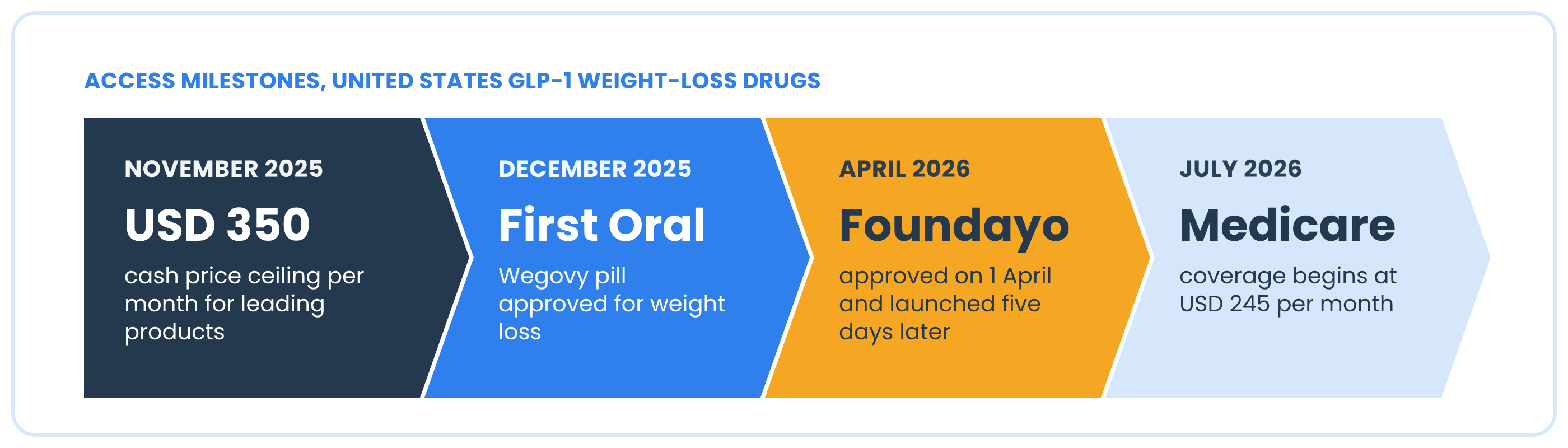
Figure 2: US GLP-1 Weight-Loss Drugs Access Milestones
Source: Neargoal Consulting Analysis
Market Dynamics
Growth Drivers
- High Obesity Prevalence and Clinical Efficacy. About 40% of adults were living with obesity in 2021-2023, and trials of tirzepatide have shown average weight loss of up to 22.5%, which has made GLP-1 medicines the standard of care for weight management.
- Oral Pills Widening Access. The Wegovy pill was approved in December 2025 and launched in January 2026, reaching more than 170,000 patients in its first three weeks. Eli Lilly’s Foundayo received approval on 1 April 2026 and launched five days later.
- Medicare Coverage. Medicare begins covering weight-loss drugs in July 2026 at a negotiated price of USD 245 per month with a USD 50 patient copay, and a bridge program for eligible Part D beneficiaries runs through December 2027.
Restraints
- Price Erosion. Cash prices have fallen sharply, with Wegovy and Ozempic at about USD 350 per month under the TrumpRx arrangement from November 2025 and Zepbound starting at USD 299, down from list prices above USD 1,000.
- Coverage and Discontinuation. Employer coverage remains uneven, and a 2025 study found that 60% of patients over 65 stopped semaglutide within a year, citing cost, side effects and muscle loss.
- Compounding and Regulatory Scrutiny. The FDA ended compounded semaglutide sales in 2025 and sent 30 warning letters to telehealth firms in March 2026, narrowing a lower-cost channel and raising compliance needs.
Opportunities
- Oral and Next-Generation Therapies. CagriSema was submitted to the FDA in December 2025, and later-stage triple-agonist programs are in development, which could widen efficacy and dosing choice.
- Medicare and Bridge Program Volume. Coverage for older adults opens a large treated population that has been largely cash-paying or uncovered.
- Direct-to-Consumer Platforms. Manufacturer cash-pay programs and telehealth partnerships are building direct channels that bypass traditional coverage friction.
- Adjacent Services. Nutrition, muscle-preservation and adherence programs sit alongside prescriptions and can raise outcomes and retention.
Policy and Regulatory Landscape
The FDA approved Wegovy in 2021 and Zepbound in 2023 for weight management, and added the first oral option in December 2025. Federal pricing agreements with Eli Lilly and Novo Nordisk underpin the USD 245 Medicare price, while the Centers for Medicare and Medicaid Services paused its voluntary Balance model after plan sponsors fell short of the required enrollment. The FDA ended the shortage-based allowance for compounded semaglutide in April and May 2025 and proposed removing semaglutide, tirzepatide and liraglutide from the outsourcing facility bulks list.
Segment Insights
By Molecule, semaglutide leads on prescription volume, while tirzepatide has gained share on efficacy and a broad dosing range. The full report quantifies each segment; the highlights below cover Route of Administration and Distribution Channel.
By Route of Administration
Injectable products accounted for all of the market until December 2025, and weekly pens remain the largest route. Oral products are the fastest-growing route after two approvals in 2025-2026, with the Wegovy pill priced from USD 149 per month for starting doses. Our analysis expects oral pills to draw first-time patients who avoid injections, while injectables keep higher-dose, higher-efficacy patients.
By Distribution Channel
- Retail and Specialty Pharmacies. The largest channel, tied to insurance and employer coverage and to Medicare from July 2026.
- Direct-to-Consumer and Telehealth. The fastest-growing channel, supported by manufacturer cash-pay programs and telehealth partnerships.
- Hospital Pharmacies. A smaller channel serving patients managed within health systems and bariatric programs.
Geographic Insights
Demand is national, but uptake varies with insurance mix, obesity prevalence and telehealth access. Southern and Midwestern states carry the highest obesity prevalence, while coastal states lead in commercial coverage and digital-first prescribing.
- South. High obesity prevalence and a large Medicare and Medicaid population make it the largest opportunity for coverage-led growth.
- Midwest. Employer-sponsored coverage decisions and rural access gaps shape uptake.
- West. Strong telehealth and cash-pay adoption supports direct-to-consumer demand.
- Northeast. Dense hospital networks and commercial coverage favor retail and hospital channels.
Competitive Landscape
Eli Lilly and Novo Nordisk dominate the market, with Zepbound and Mounjaro competing against Wegovy and Ozempic. Wegovy sales were about USD 8 billion and Zepbound about USD 4.9 billion in 2024. Competition is moving from supply to price, convenience and oral formats, with telehealth operators such as Hims & Hers partnering with manufacturers. Pipeline entrants and generic liraglutide add pressure at the lower end of the market.
Novo Nordisk | Eli Lilly | Hims & Hers | Teva |
Amgen | Pfizer | Roche | Viking Therapeutics |
Logos are trademarks of their respective owners, shown for identification only; no affiliation or endorsement is implied.
Key Developments, 2025-2026
- November 2025. Novo Nordisk and Eli Lilly agree pricing with the White House, bringing cash prices for leading products to about USD 350 per month or lower.
- December 2025. The FDA approves the Wegovy pill, the first oral GLP-1 for weight loss, and Novo Nordisk submits CagriSema for review.
- April 2026. Eli Lilly receives approval for Foundayo on 1 April and launches five days later.
- July 2026. Medicare begins covering weight-loss drugs at USD 245 per month with a USD 50 copay.
What This Means for Decision-Makers
- Manufacturers: Plan for price-for-volume trade-offs and build oral and direct channels.
- Payers and Employers: Model adherence and cost per outcome, not list price alone.
- Providers and Telehealth Operators: Invest in adherence, nutrition and monitoring services.
- Investors: Underwrite on volume growth and net price, not on 2021-2025 revenue trends.
About the Report
Table 2: US GLP-1 Weight-Loss Drugs Market: Report Coverage
Coverage Area | What the Report Covers |
Market Size and Forecast | Revenue (USD Billion) and Patient Views, 2021-2031F |
Segmentation | Molecule, Route of Administration, Distribution Channel and Region |
Geography | South, Midwest, West and Northeast |
Competition | Manufacturers, Telehealth Operators, Pricing and Pipeline Tracking |
Policy and Pricing | Medicare Coverage, Cash Prices, Compounding Rules and Reimbursement |
Outlook and Recommendations | White-Space Assessment and Guidance by Stakeholder |
Source: Neargoal Consulting Analysis | |
The research report, US GLP-1 Weight-Loss Drugs Market Outlook 2021-2031F - Market Size, Share, Trends, Opportunities, and Competitive Analysis - Segmented by Molecule (Semaglutide, Tirzepatide, and Others); Route of Administration (Injectable and Oral); Distribution Channel (Retail and Specialty Pharmacies, Direct-to-Consumer and Telehealth, and Hospital Pharmacies); and Region, covers prescription GLP-1 and related incretin medicines dispensed for weight management in the US, with a 2025 base year, a 2026E estimate and a 2027F-2031F forecast. It excludes products for type 2 diabetes use alone, compounded products and over-the-counter supplements. Market estimates and projections are based on Neargoal Consulting’s proprietary research methodology, exhaustive primary and secondary research.
For questions about report coverage, methodology, suitability, etc.
For requirements beyond the published report