
Indonesia Quick Commerce Market Outlook 2021-2031F
Market Size, Share, Trends, Opportunities, and Competitive Analysis - Segmented by Product Category (Grocery and Fresh, Household and Personal Care, and Beauty, Electronics and Others); Business Model (Convenience Chain Hubs, Platform-Owned Dark Stores, and Marketplace and Partner Stores); Delivery Window (Under 30 Minutes, and 30-60 Minutes); and Region
Indonesia Quick Commerce Market to Reach USD 750 Million by 2031, Growing at a 20% CAGR: How Convenience Chains, Super-Apps and Island Logistics Are Shaping Fast Delivery

Indonesia Quick Commerce Market Overview
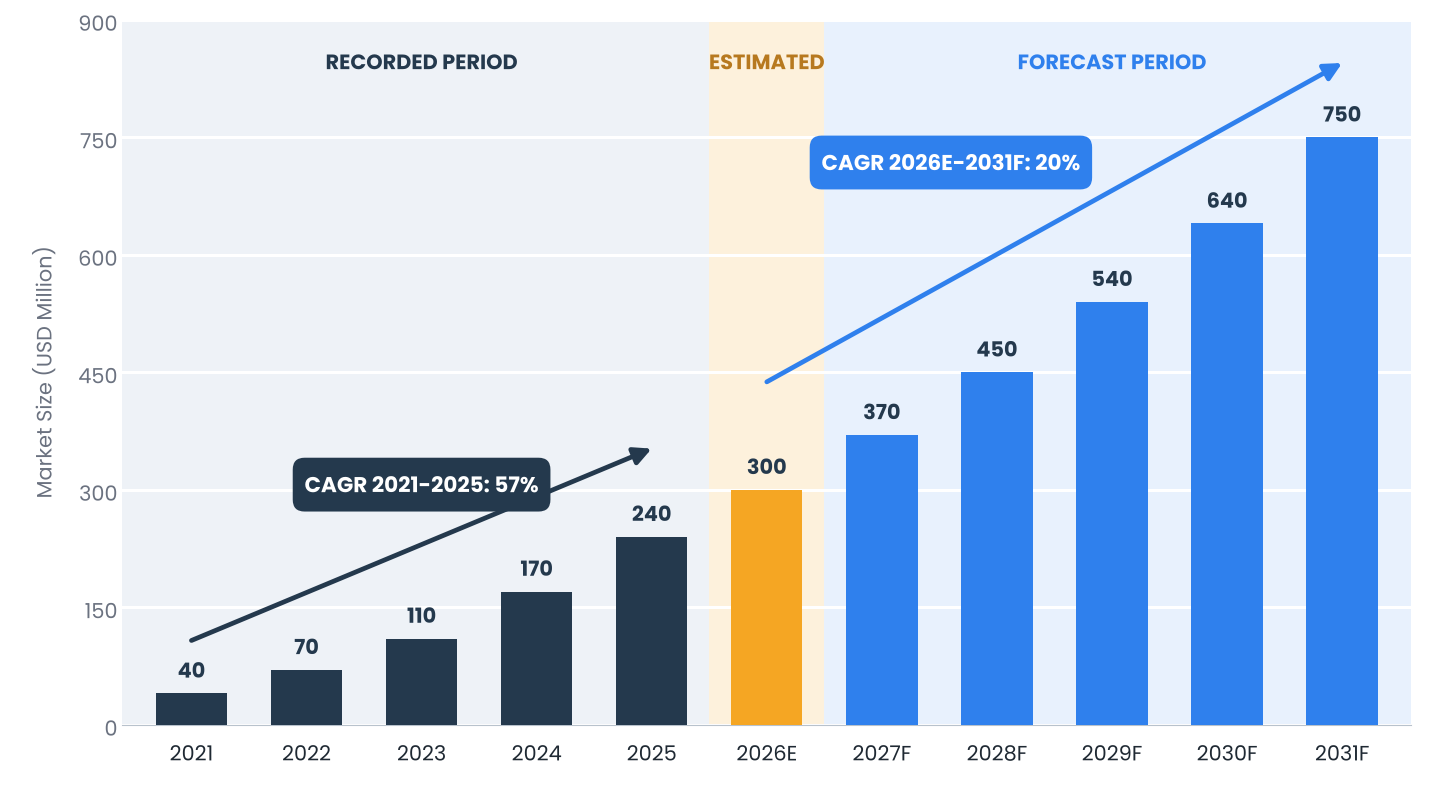
Indonesia’s quick commerce market is being built by convenience chains as much as by technology platforms. Neargoal Consulting estimates net revenue at about USD 240 million in 2025, rising to USD 300 million in 2026E and USD 750 million by 2031, a 20% CAGR over 2026E-2031F, after a 57% CAGR over 2021-2025 from a small base. Alfamart has about 24,000 stores in Indonesia, has turned about 3,500 of them into hubs that promise delivery within an hour, and its Alfagift app had 25 million members in February 2026.
Key Takeaway Indonesia’s advantage is the density of existing stores, which lets chains offer fast delivery without building every dark store from scratch. Players that combine store networks, app habits and low-cost delivery will convert frequency into profit in a price-sensitive market. |
Table 1: Indonesia Quick Commerce Market: Key Insights
Metric | Finding |
Market Definition | Platform and Retailer Net Revenue from Commissions, Delivery Fees, Advertising and Retail Margin on Orders Delivered Within 60 Minutes in Indonesia (USD Million) |
Base Year / Estimated Year | 2025 / 2026E |
Forecast Period | 2027F-2031F |
Market Size, 2025 | USD 240 Million |
Market Size, 2026E | USD 300 Million |
Market Size, 2031F | USD 750 Million |
Recorded CAGR, 2021-2025 | 57% |
Forecast CAGR, 2026E-2031F | 20% |
Alfagift Members, February 2026 | 25 Million, Growing More Than 30% a Year |
Alfamart Online Share of Sales | 8% (Up from 6% in December 2024) |
Alfamart Stores Used as Delivery Hubs | About 3,500, Delivery Within an Hour |
Alfamart Dark Stores | 50 Last Year, Target of 100 |
Alfamart Store Network | About 24,000 Stores in Indonesia |
Leading Business Model | Convenience Chain Hubs and Platform Dark Stores |
Key Constraints | Thin Margins, Logistics Cost and Price Sensitivity |
Source: Neargoal Consulting Analysis | |
Market Outlook
Our study estimates the market will grow at a 20% forecast CAGR (2026E-2031F) from USD 300 million in 2026E, after a 57% CAGR over 2021-2025 from a small base. The base case assumes growth concentrated in Greater Jakarta and other Java cities, with expansion into other islands limited by logistics costs. Alfamart’s online sales reached 8% of revenue, up from 6% in December 2024, which shows how quickly online share can move for a large chain.
Figure 1: Indonesia Quick Commerce Market Size, 2021-2031F (USD Million)
Source: Neargoal Consulting Analysis
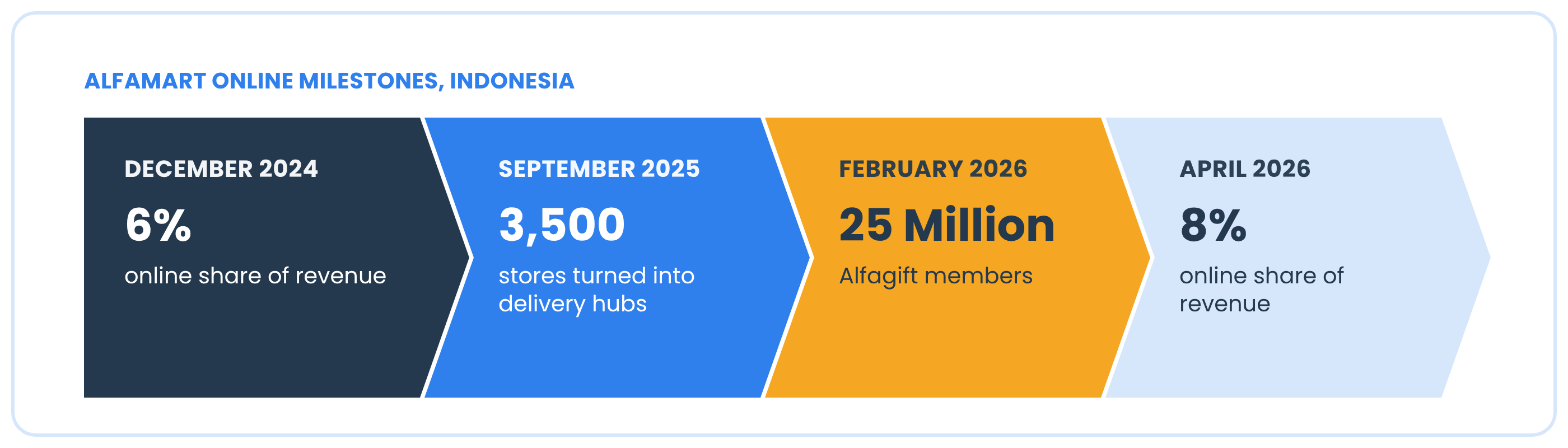
Figure 2: Alfamart Online Milestones in Indonesia
Source: Neargoal Consulting Analysis
Market Dynamics
Growth Drivers
- Dense Convenience Networks. Alfamart has about 24,000 stores and Indomaret more than 23,000 outlets as of 2024, giving both chains a ready network for fast delivery.
- App Adoption. Alfagift launched in 2021 and has 25 million members, growing more than 30% a year, and online sales are 8% of Alfamart revenue.
- Urban Convenience Demand. Customers order small baskets frequently, with one customer cited at about USD 6.11 (IDR 100,000) per order, once or twice a week, with free delivery.
Restraints
- Thin Margins. Alfamart’s net income fell 3.5% in the first nine months of 2025 to USD 141 million (IDR 2.3 trillion), a reminder that retail margins are tight.
- Logistics and Geography. Delivery across Java and other islands is costly, limiting profitable coverage beyond dense cities.
- Price Sensitivity. Consumers compare prices closely, and sales of ready-to-drink beverages fell about 20% at Alfamart.
Opportunities
- Dark-Store Expansion. Alfamart ran 50 dark stores last year and aims to double the number, adding range beyond the 4,000-4,500 products in a typical store.
- Hub-Based Delivery. About 3,500 Alfamart stores promise delivery within an hour from existing stores, which limits fixed cost.
- Retail Media and Brand Partnerships. Large member bases create advertising and sampling opportunities for brands.
- Cross-Border and Format Extension. Chains are testing new formats and markets, including cinema concepts and entry into Bangladesh and the Philippines.
Policy and Regulatory Landscape
Quick commerce in Indonesia is shaped by e-commerce regulation, food safety and halal certification rules, consumer protection law and personal data protection law. Delivery rider rules set by the government and platforms affect costs, and foreign investment rules govern retail ownership. Local government licensing applies to stores and dark stores. The full report assesses how licensing, rider and data rules affect expansion.
Segment Insights
The full report quantifies every segment; the highlights below cover Product Category, Business Model, and Delivery Window.
By Product Category
Grocery and fresh drive frequency.
By Business Model
Convenience chain hubs, led by Alfamart and Indomaret, convert existing stores into delivery points, which limits capital and speeds coverage. Platform-owned dark stores offer wider range and control but need order density. Marketplace and partner-store models connect merchants to app users. Our analysis expects hybrid models to become common as chains add dark stores to store networks.
By Delivery Window
- Under 30 Minutes. The fastest tier, concentrated in dense areas of Greater Jakarta.
- 30-60 Minutes. The broader tier, such as Alfamart’s delivery within an hour from about 3,500 stores.
Geographic Insights
Demand concentrates on Java, with Greater Jakarta as the core.
- Greater Jakarta. The largest market, with the densest store networks and highest order frequency.
- Rest of Java. Large cities such as Surabaya, Bandung and Semarang are the next growth areas.
- Sumatra. Medan and Palembang offer scale but need longer delivery distances.
- Other Islands. Early-stage coverage with limited density.
Competitive Landscape
Key participants include Alfamart, Indomaret, GoTo, Grab, Shopee, Astro and Segari. Competition rests on store density, app adoption, price and delivery cost. Alfamart’s Alfagift app and Indomaret’s network anchor the convenience chains, while platform and start-up players focus on dark stores and categories.
Alfamart | Indomaret | GoTo | Grab |
Shopee | Astro | Segari |
Key Developments, 2025-2026
- December 2024. Alfamart online sales stand at 6% of revenue.
- September 2025. About 3,500 Alfamart stores are turned into delivery hubs that promise delivery within an hour.
- February 2026. Alfagift reaches 25 million members, growing more than 30% a year.
- 2026. Alfamart aims to double its 50 dark stores and slows its pace of new store openings from about 1,000 a year.
What This Means for Decision-Makers
- Convenience Chains: Use store networks as hubs and add dark stores where density supports them.
- Platforms: Focus on dense areas of Greater Jakarta and build advertising revenue.
- Brands: Use member bases for sampling and retail media.
- Investors: Underwrite on order frequency and margins, not on member counts.
About the Report
Table 2: Indonesia Quick Commerce Market: Report Coverage
Coverage Area | What the Report Covers |
Market Size and Forecast | Revenue (USD Million) and Order Views, 2021-2031F |
Segmentation | Product Category, Business Model, Delivery Window and Region |
Geography | Greater Jakarta, Rest of Java, Sumatra and Other Islands |
Competition | Convenience Chains, Platforms, Start-Ups and Dark-Store Tracking |
Policy and Operations | Licensing, Halal Rules, Rider Rules and Data Protection |
Outlook and Recommendations | White-Space Assessment and Guidance by Stakeholder |
Source: Neargoal Consulting Analysis | |
The research report, Indonesia Quick Commerce Market Outlook 2021-2031F - Market Size, Share, Trends, Opportunities, and Competitive Analysis - Segmented by Product Category (Grocery and Fresh, Household and Personal Care, and Beauty, Electronics and Others); Business Model (Convenience Chain Hubs, Platform-Owned Dark Stores, and Marketplace and Partner Stores); Delivery Window (Under 30 Minutes, and 30-60 Minutes); and Region, covers net revenue from commissions, delivery fees, advertising and retail margin on orders delivered within 60 minutes in Indonesia, with a 2025 base year, a 2026E estimate and a 2027F-2031F forecast. It excludes restaurant food delivery, scheduled grocery deliveries and cross-border orders. Market estimates and projections are based on Neargoal Consulting’s proprietary research methodology, exhaustive primary and secondary research.
For questions about report coverage, methodology, suitability, etc.
For requirements beyond the published report